
We have moved this content to EquinePlusFeed.com
Our Hi-Pro Feed has been renamed Equine Plus® Feed. The ingredients and manufacturing process are the same, only the name has changed.
Modern horse health is not defined by isolated problems.
Equine health science is the study of how muscle metabolism, inflammation, digestion, electrolyte balance, and blood function interact to determine horse performance, recovery, and overall health. Disruptions in these systems are the root cause of common issues such as tying-up, fatigue, poor recovery, and digestive disorders.
Quick Answer: Equine health science explains how muscle metabolism, inflammation, digestion, electrolyte balance, blood oxygen transport, and energy metabolism work together to determine performance, recovery, and overall health in horses. Most performance problems are system-level issues, not isolated conditions.
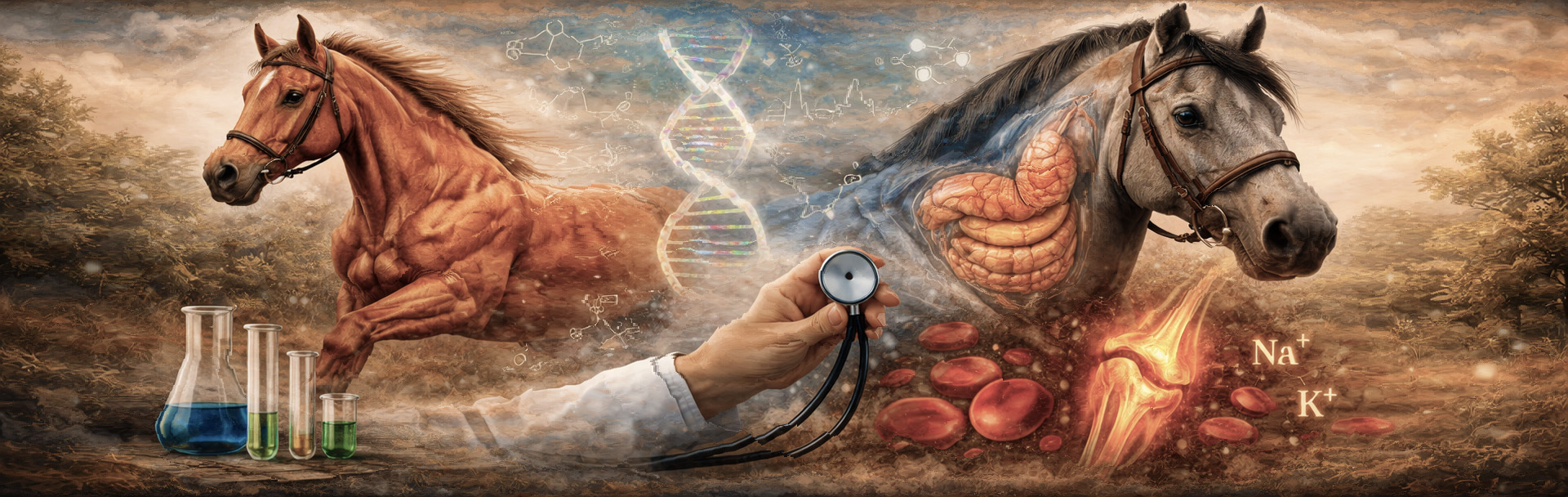
Equine health science is a system-based framework that explains how interconnected biological processes determine horse performance, recovery, and overall health.
Modern equine health is not defined by isolated problems—it is driven by interconnected biological systems that determine how a horse performs, recovers, and adapts to stress.
Many common issues in performance horses—such as tying-up, fatigue, stiffness, and digestive discomfort—are not standalone conditions. They are system-level responses involving muscle metabolism, inflammation pathways, electrolyte balance, and energy utilization.
By understanding how these systems interact, horse owners and trainers can identify the root causes of performance issues and apply more precise nutritional and management strategies.
This framework reflects the core biological systems that govern equine performance and is used by trainers, veterinarians, and nutritionists to identify root causes of health and performance issues.
These systems form an interconnected biological network that must function in balance for optimal horse health and performance.
Electrolyte imbalance directly affects muscle contraction and nerve signaling, increasing the risk of tying-up.
Poor digestion reduces nutrient absorption, impairing energy metabolism and recovery.
Inflammation can disrupt muscle function and metabolic efficiency, leading to fatigue.
Blood health determines oxygen delivery, which is essential for ATP production in muscle cells.
Muscle metabolism in horses is the biochemical process that produces and regulates energy within muscle cells during exercise and recovery.
When muscle metabolism is disrupted, horses may experience:
Tying-up (exertional rhabdomyolysis)
Muscle stiffness or cramping
Reduced endurance
Delayed recovery
Understanding how energy systems function—particularly ATP production, glycogen utilization, and oxygen delivery—is essential for preventing performance-limiting conditions.
Muscle Metabolism & Performance in Horses
Inflammation in horses is the biological response to physical stress or tissue damage that regulates healing, repair, and recovery processes.
In performance horses, inflammation is often misunderstood as purely a joint issue—but in reality, it frequently originates in muscle tissue and metabolic stress pathways.
Key considerations include:
Acute vs chronic inflammation
Cytokine activity following exercise
Muscle soreness vs structural injury
Inflammation vs Joint Health in Horses
Digestive health in horses is the process by which feed is broken down, fermented, and absorbed to provide nutrients and maintain gastrointestinal balance.
Gastric ulcers
Hindgut acidosis
Poor nutrient absorption
Behavioral changes and performance decline
Because horses rely on continuous fermentation, even small disruptions in pH balance can have systemic effects.
Hindgut Health & Digestive Function in Horses
Electrolyte balance in horses is the regulation of minerals such as sodium, potassium, and chloride that control hydration, nerve signaling, and muscle contraction.
Electrolyte imbalance can contribute to:
Muscle dysfunction
Fatigue
Dehydration
Increased risk of tying-up
Maintaining proper electrolyte balance is critical for both performance and recovery.
Electrolytes for Horses: Hydration, Muscle Function and Performance
Blood health in horses is the system responsible for transporting oxygen, nutrients, and metabolic byproducts through red blood cells and circulation.
Poor blood health may result in:
Reduced stamina
Slow recovery
Decreased oxygen utilization
Blood Health and Oxygen Transport in Horses
Joint health in horses refers to the structural integrity and function of cartilage, synovial fluid, and connective tissues that support movement and reduce friction.
Joint health focuses on structural integrity (cartilage, synovial fluid)
Inflammation involves biological signaling and tissue response
Confusing these two can lead to ineffective supplementation strategies and poor performance outcomes.
Joint Health vs Inflammation in Horses
Metabolism in horses is the integrated system that converts nutrients into usable energy to support cellular function, performance, and recovery.
Disruptions in metabolism can manifest as:
Fatigue
Poor performance
Increased susceptibility to metabolic disorders
Equine Metabolism & Energy Systems
Targeted nutritional support can help maintain balance across these systems, particularly in performance horses under stress.
Equine health science is the study of how biological systems such as muscle metabolism, inflammation, digestion, electrolyte balance, and blood function interact to influence a horse’s performance, recovery, and overall health. It focuses on identifying root causes of issues rather than treating symptoms alone.
Tying-up in horses is typically caused by disruptions in muscle metabolism, often influenced by electrolyte imbalances, inflammation, and energy utilization issues. These factors can impair normal muscle function and lead to stiffness, cramping, and reduced performance.
Electrolytes regulate hydration, nerve signaling, and muscle contraction. When horses lose electrolytes through sweat and they are not properly replaced, it can lead to fatigue, poor coordination, and increased risk of muscle disorders such as tying-up.
Joint issues involve structural components such as cartilage and synovial fluid, while inflammation is a biological response to stress or tissue damage. Inflammation can occur in muscles and soft tissue, not just joints, and requires a different management approach.
The digestive system determines how effectively nutrients are broken down and absorbed. Poor digestive function can reduce energy availability, disrupt metabolic processes, and negatively impact performance and recovery.
Blood health affects oxygen transport to muscle tissue. Adequate red blood cell function and nutrient levels support efficient energy production, while deficiencies can lead to fatigue, reduced stamina, and slower recovery.